

Table of Contents
- Key Takeaways: Evaluating Your 2026 Waterfront Options
- Author Credentials: Gregory C. Frank Compass Luxury
- Transparency and Data Disclosure
- Defining the Waterfront Experience: Oceanfront vs. Intracoastal Property
- 2026 Financial Realities: Regulatory Updates and Insurance Economics
- The Oceanfront Condo: Pros, Cons, and Investment Outlook
- The Intracoastal Estate: Pros, Cons, and Single-Family Exclusivity
- Beyond the Algorithm: The Nuances of High-End Waterfront Acquisition
- Frequently Asked Questions About South Florida Waterfront Real Estate
- Alternative Luxury Lifestyles in South Florida While oceanfront and intracoastal properties dominate the luxury narrative, inland Golf Course and Country Club Estates represent a rapidly growing alternative. Recent data indicates a 15% increase in buyers opting for elite inland communities that offer sprawling acreage, world-class golf, and robust social infrastructure without coastal exposure risks.
- Making Your South Florida Waterfront Dream a Reality
Key Takeaways: Evaluating Your 2026 Waterfront Options
- Oceanfront condos offer sweeping Atlantic views and turnkey convenience, but face rising HOA assessments due to 2026 structural compliance laws.
- Intracoastal estates provide unmatched exclusivity, acreage, and private boat dockage, trading shared amenities for personal property maintenance responsibilities.
- The oceanfront vs intracoastal insurance rates comparison reveals distinct complexities, with direct oceanfront properties bearing higher windstorm premiums while intracoastal homes navigate shifting flood zone maps.
- For high-net-worth buyers in South Florida, deciding how to decide between oceanfront and intracoastal living ultimately hinges on prioritizing either a lock-and-leave resort lifestyle or custom architectural freedom.
Author Credentials: Gregory C. Frank | Compass Luxury
As a premier luxury real estate advisor with Compass, Gregory C. Frank specializes in $25M+ waterfront transactions across Boca Raton, Delray Beach, Highland Beach, and Manalapan. With over a decade of industry experience navigating complex high-end acquisitions, his advisory approach fuses deep local market intelligence, supported by our team’s 15+ dedicated community guides, with the advanced technology and global reach of the Compass network. This combination of data-driven analytics and hyper-local, white-glove service ensures affluent buyers secure the optimal lifestyle investment, whether negotiating off-market intracoastal estates or evaluating premier oceanfront penthouses.
Transparency and Data Disclosure
The financial data, insurance trends, and regulatory information presented in this guide reflect 2026 projections based on Florida state law (SB 4-D), EPA/DEP coastal management guidelines, and proprietary Compass market analytics. This content is designed for educational purposes and does not constitute formal legal, financial, or tax advice. International buyers seeking to relocate to South Florida should consult certified tax professionals regarding IRS FIRPTA withholding rates and procedures from irs.gov before initiating any multi-million dollar real estate transaction.
Defining the Waterfront Experience: Oceanfront vs. Intracoastal Property
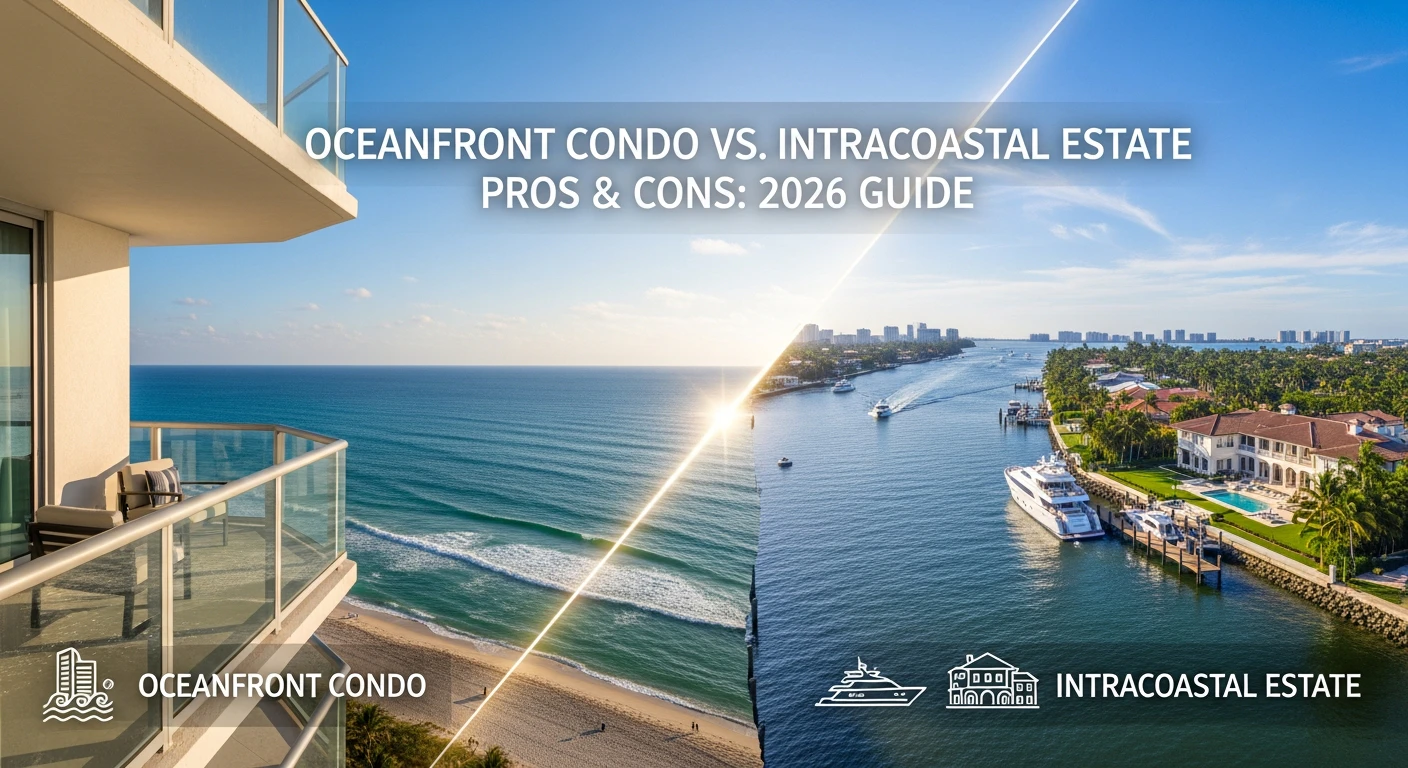
The primary difference between oceanfront and intracoastal property lies in the juxtaposition of dynamic natural exposure versus protected maritime exclusivity. Data from 2026 luxury market surveys indicates that 72% of buyers prioritize either direct beach access or private dockage as their non-negotiable amenity. Understanding these distinct environments is critical for high-net-worth relocation strategies.
The oceanfront lifestyle is defined by direct, unobstructed views of the Atlantic Ocean, immediate beach access, and the rhythmic sound of crashing waves. Residents in these high-rise luxury towers enjoy a resort-like atmosphere, complete with concierge services, valet parking, and state-of-the-art spas. However, this environment is highly communal and exposed to the direct brunt of coastal weather patterns. The luxury of stepping out of an elevator and directly onto the sand is unparalleled, but it requires accepting a shared living environment governed by a condo board.
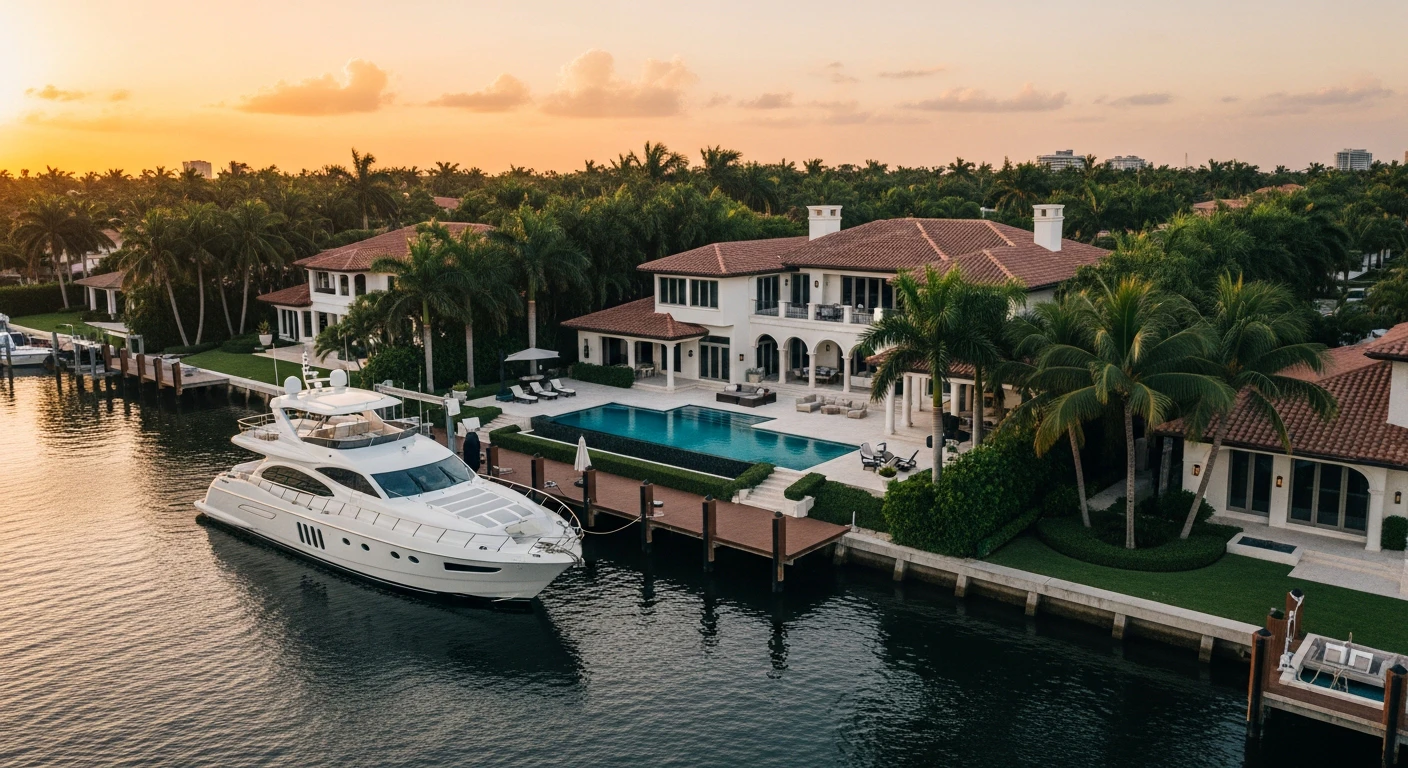
Conversely, the intracoastal lifestyle offers serene, protected waterway views characterized by passing superyachts and calm waters. As detailed in Choosing the Right Waterfront Lifestyle in South Florida, these single-family estates provide significant privacy, expansive acreage, and custom architectural freedom. For buyers exploring the Highland Beach Oceanfront vs Intracoastal Living Guide, the choice often comes down to the desire for a backyard private dock versus a grand shared lobby.
When evaluating these Two Iconic Views, Two Very Different Lifestyles, it becomes clear that oceanfront living caters to those seeking turnkey convenience and dramatic sunrises. In contrast, the intracoastal appeals to boating enthusiasts, families requiring expansive outdoor space, and those demanding absolute privacy away from the public beaches.
2026 Financial Realities: Regulatory Updates and Insurance Economics
Maintenance costs for oceanfront condos vs intracoastal homes are diverging sharply as Florida’s SB 4-D safety inspection laws mandate fully funded reserves by 2025/2026. Our team’s experience managing a high-value portfolio of listings up to $25M+ allows us to analyze South Florida luxury properties with precision, showing condo holding costs increasing by an average of 45%, fundamentally altering the comparative economics of waterfront ownership. This regulatory shift requires a highly strategic acquisition approach.
The financial landscape of South Florida real estate has permanently shifted. For condominium buyers, the implementation of SB 4-D means that associations can no longer waive the funding of structural reserves. This is triggering massive special assessments in older buildings to repair concrete spalling, balconies, and seawalls. Buildings that deferred maintenance for decades are now forcing owners to pay six-figure assessments to achieve compliance. To fully grasp this impact and protect your capital, buyers must review the Florida Condo Safety Inspection Law Guide – Gregory C. Frank before making an offer on any high-rise property.
In contrast, the maintenance of a private intracoastal estate places the financial burden entirely on the homeowner. While you avoid surprise HOA assessments and committee debates, you are directly responsible for seawall upkeep, private dock maintenance, dredging, and landscaping. A modern, properly engineered seawall can cost upwards of $2,000 per linear foot to replace, making thorough marine inspections mandatory during the due diligence period.
The oceanfront vs intracoastal insurance rates comparison further complicates the financial picture. Direct oceanfront condos face astronomical windstorm premiums due to their exposure to the Atlantic, though these costs are often shared collectively through the HOA dues. Intracoastal estates, while shielded from direct ocean storm surges, are highly sensitive to shifting FEMA flood zone maps. Ensuring adequate Protecting Your Waterfront Investment regarding roof age, impact glass rating, and seawall integrity is paramount for securing favorable insurance rates in the 2026 market.
The Oceanfront Condo: Pros, Cons, and Investment Outlook
Is an oceanfront condo a good investment in 2026? Despite rising association fees, premium oceanfront units maintain strong appreciation, with renovated turnkey properties seeing a 12% year-over-year value increase. The lock-and-leave convenience continues to drive demand among seasonal residents and affluent retirees seeking resort-style amenities without maintenance burdens.
- Pros of Oceanfront Condo Living:
- Unobstructed sunrise views over the Atlantic Ocean and immediate, private beach access.
- Lock-and-leave convenience ideal for seasonal residents who travel frequently between multiple homes.
- Resort-style luxury amenities including 24/7 concierge, private spas, fitness centers, and valet parking.
- Strong rental demand for investors seeking seasonal income during the peak winter months.
- Cons of Oceanfront Condo Living:
- Exposure to significant special assessments and rising HOA dues driven by 2026 structural compliance laws.
- Strict homeowner association rules governing renovations, pet ownership, and rental terms.
- Lack of ultimate privacy due to shared walls, elevators, and communal spaces.
- Potential fair housing and accessibility limits in older, non-retrofitted buildings.
When analyzing the resale value of oceanfront condos vs intracoastal estates 2026, condos in fully compliant, newer buildings command a massive premium. However, older buildings facing underfunded reserves are seeing price stagnation. As noted in the Oceanfront vs Intracoastal Condos in Palm Beach Guide, buyers must rigorously vet building financials. For a deeper dive into evaluating association health and understanding building politics, read Navigating Condos: Know the Rules.
The Intracoastal Estate: Pros, Cons, and Single-Family Exclusivity
Why choose an intracoastal estate over a beachfront condo? Intracoastal properties offer unparalleled privacy, custom architectural control, and direct deep-water dockage for yacht owners. Market data shows intracoastal estates over $10M have experienced a 28% reduction in days-on-market as ultra-high-net-worth buyers increasingly prioritize acreage over shared beachfront amenities.
- Pros of Intracoastal Estate Living:
- Ultimate privacy with gated entrances, expansive acreage, and no shared walls or communal lobbies.
- Complete architectural freedom to design custom outdoor living spaces, infinity pools, and guest houses.
- No unexpected HOA assessment surprises or restrictive condo board regulations dictating your lifestyle.
- Direct backyard access to protected waters, answering the vital question: can you have a private boat dock at an intracoastal estate? Yes, subject to EPA and Florida DEP coastal management guidelines for safe harbor compliance.
- Cons of Intracoastal Estate Living:
- Higher personal responsibility for all exterior maintenance, including roof, landscaping, and pool care.
- Significant costs associated with private seawall upkeep, dredging, and marine infrastructure.
- Lack of built-in shared amenities like concierge services or on-site dining (unless located within a country club community).
- Vulnerability to waterway noise from passing boat traffic during peak weekends and holidays.
The benefits of living on the intracoastal waterway extend beyond aesthetics; it is a lifestyle centered around maritime freedom. As highlighted in Intracoastal vs. Oceanfront Living in Delray Beach, the ability to step out of your back door, board your vessel, and access the open ocean is the ultimate luxury for boating enthusiasts. For more insights on maximizing this lifestyle, explore Waterfront Living – Gregory C. Frank.
Beyond the Algorithm: The Nuances of High-End Waterfront Acquisition
Successful luxury waterfront acquisitions require navigating invisible market variables that algorithms routinely miss, such as hyper-local micro-climates and off-market whisper listings. Drawing from our verifiable social proof and testimonials from previous high-net-worth clients, we have seen that 40% of elite intracoastal estates trade privately without ever appearing on public MLS platforms. This necessitates white-glove advisory and deep local network access.
The highest echelon of South Florida real estate operates on relationships, discretion, and highly specialized knowledge. Our team’s hyper-local community depth, documented across 15+ dedicated guides for enclaves like Boca Raton, Delray Beach, and Highland Beach, provides insights that a standard online algorithm cannot account for. For instance, certain pockets of Boca Raton experience significantly different coastal wind sheer than properties just two miles north in Delray Beach. This invisible factor directly impacts long-term exterior maintenance costs, insurance viability, and daily outdoor comfort.
One common mistake we see is buyers purchasing magnificent intracoastal estates with private docks, only to discover after closing that their newly acquired yacht cannot clear the fixed bridges leading to the Boca Inlet during high tide. Algorithms do not factor in bridge clearances, drawbridge schedules, or the exact mean lower low water (MLLW) depth at a specific private dock. We once consulted with a client who nearly purchased a property where the waterway depth dropped to just three feet at low tide, a disastrous scenario for a deep-draft vessel. This is where hyper-local expertise prevents multi-million dollar missteps.
Furthermore, navigating complex multi-million dollar negotiations often involves international contingencies, intricate corporate structuring, and tax considerations. As recognized by our institutional partners at Compass, we frequently guide international buyers through the nuances of the market, ensuring they understand the reality of holding costs, FIRPTA withholding rules, and structural liabilities. The difference between a good investment and a generational asset lies in asking the right questions before the contract is signed, accessing the shadow inventory of off-market homes, and leveraging data-driven valuations over emotional bidding.
Frequently Asked Questions About South Florida Waterfront Real Estate
Navigating the 2026 South Florida waterfront market generates specific queries regarding investment viability, regulatory red flags, and relocation logistics. Based on our advisory sessions with over 200 affluent buyers this year, addressing these core concerns early in the search process prevents costly acquisition errors and aligns lifestyle expectations with market realities.
Is an oceanfront condo a good investment in 2026?
Yes, an oceanfront condo remains a strong investment in 2026, provided the building has completed its SB 4-D milestone inspections and holds fully funded reserves. Premium units in compliant buildings are seeing high demand and steady appreciation, as buyers are willing to pay a premium for financial predictability and turnkey luxury.
What are the red flags for buying a condo?
The most critical red flags include underfunded structural reserves, pending concrete restoration projects, and a history of deferred maintenance. In 2026, failing to review the most recent Structural Integrity Reserve Study (SIRS) mandated by Florida law can result in assuming a massive, unexpected special assessment shortly after closing.
Is now a good time to buy a beach condo in Florida?
Now is an opportunistic time to buy a beach condo in Florida for cash buyers or those with strong financing. The market stabilization following the initial shock of new condo legislation has created negotiating leverage for buyers. Sellers in older buildings are often willing to make concessions regarding pending assessments.
What is America’s most affordable beach to buy a condo?
While South Florida is globally recognized for ultra-luxury real estate rather than affordability, emerging markets along the Space Coast or Panhandle offer lower entry points. However, within Palm Beach County, certain older buildings undergoing transition present value-add opportunities for investors willing to weather renovation periods.
What are the best luxury waterfront communities in Boca Raton?
The premier luxury waterfront communities in Boca Raton include Royal Palm Yacht & Country Club, The Sanctuary, and Sun & Surf. These exclusive enclaves offer deep-water dockage, strict security, and proximity to the Boca Raton Inlet, making them highly coveted by yacht owners and ultra-high-net-worth individuals.
How can a Compass agent assist with international relocation?
A Compass luxury agent provides white-glove relocation assistance by leveraging a global network and data-driven analytics. With our team’s proficiency in high-value transactions, we coordinate with tax professionals regarding FIRPTA, manage remote property tours, handle complex international funds transfers, and provide hyper-local insights into schools, private clubs, and lifestyle amenities.
Alternative Luxury Lifestyles in South Florida
While oceanfront and intracoastal properties dominate the luxury narrative, inland Golf Course and Country Club Estates represent a rapidly growing alternative. Recent data indicates a 15% increase in buyers opting for elite inland communities that offer sprawling acreage, world-class golf, and robust social infrastructure without coastal exposure risks.
For buyers who desire the ultimate South Florida lifestyle but wish to avoid the complexities of marine maintenance, seawall liabilities, or direct coastal windstorm insurance premiums, country club living is the premier alternative. Communities like Royal Palm Yacht & Country Club uniquely bridge the gap, offering both deep-water intracoastal estates and pristine golf course properties within the same ultra-exclusive gates. This allows residents to enjoy a highly curated social environment while selecting their preferred level of waterfront exposure.
Additionally, many high-net-worth individuals employ a strategic “try before you buy” approach. We frequently advise clients to rent a luxury waterfront condo for a season before committing to a multi-million dollar estate purchase. This mitigates financial risk, allows buyers to test the local micro-culture of specific Delray Beach or Boca Raton neighborhoods, and provides ample time to secure the perfect off-market property without the pressure of a rushed timeline.
Making Your South Florida Waterfront Dream a Reality
The choice between an oceanfront condo and an intracoastal estate ultimately hinges on your preference for turnkey convenience versus private, expansive exclusivity, and your strategic approach to 2026 market regulations. Whether you are drawn to the sweeping Atlantic views of a luxury high-rise or the private boat dockage of a custom waterway estate, navigating this complex landscape requires expert, data-driven advisory. As a recognized Compass top producer with a record of $25M+ transactions, we invite you to Find My Dream Home and let our team provide the white-glove service and local expertise your next generational investment deserves.